Superyacht Engineer Path
Your route into the technical heart of a superyacht. As an engineer, you are responsible for ensuring that all systems run safely and efficiently, including engines, generators, electrics, hydraulics, and more. This path provides a realistic overview of what the job entails, what you need to get started, and how you can grow over time.
What does an engineer actually do on board?
Propulsion & generators
Operating, monitoring and maintaining main engines and generators, including oil changes, filters, checks and troubleshooting when alarms appear.
Electrical & electronic systems
Looking after switchboards, batteries, chargers, lighting, navigation electronics and general power distribution around the yacht.
Pumps, plumbing & hydraulics
Maintaining pumps for fuel, water and sewage, stabilisers, bow thrusters, steering and other hydraulic systems essential for safe operations.
Planned maintenance & documentation
Following the planned maintenance system (PMS), logging completed work, ordering spares and preparing the yacht for surveys, inspections and yard periods.
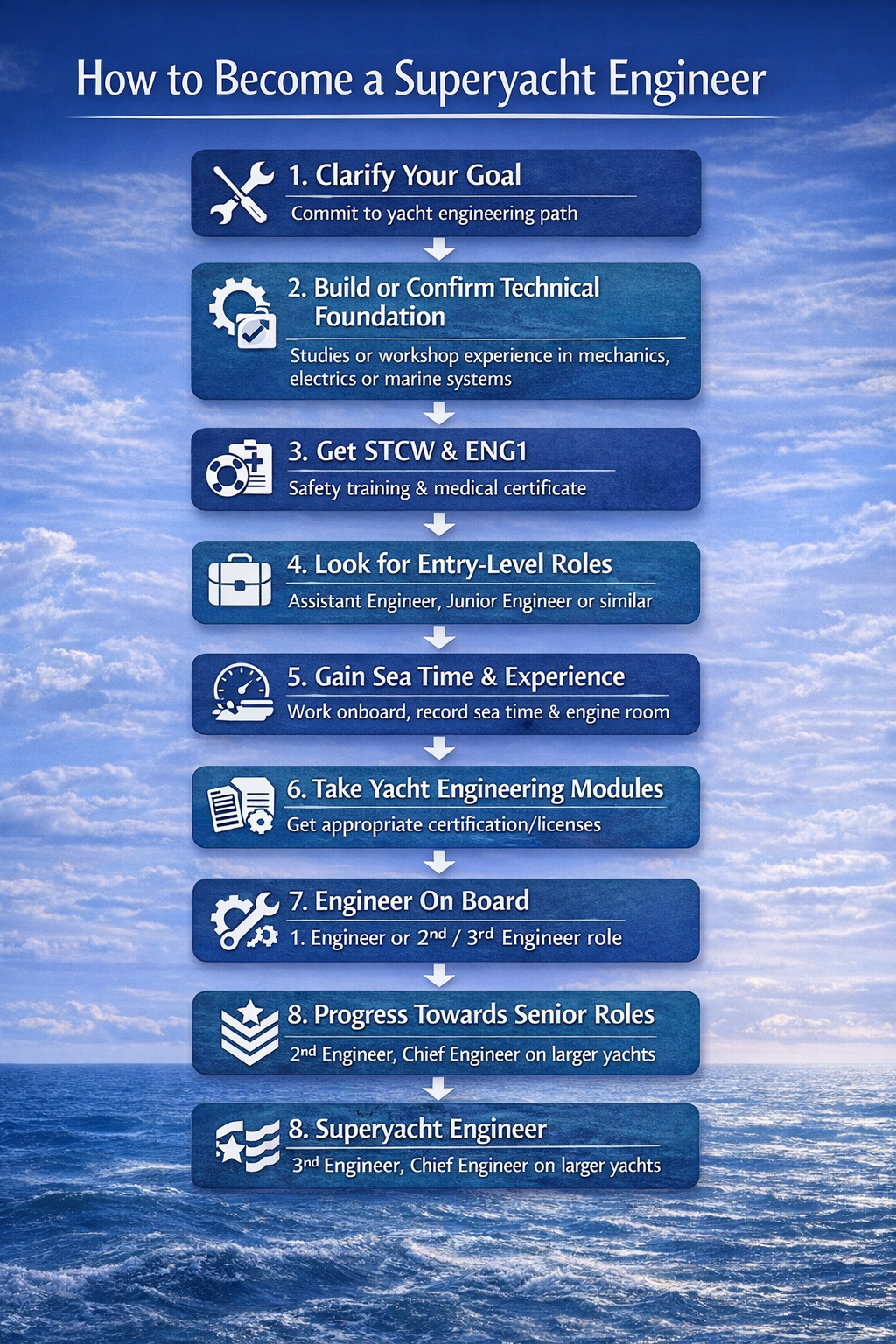
What you need to get started
Depending on flag state and yacht size, you may also need or benefit from yacht engineering modules or licences later in the path (for example, AEC, higher-level yacht CoCs, etc.).